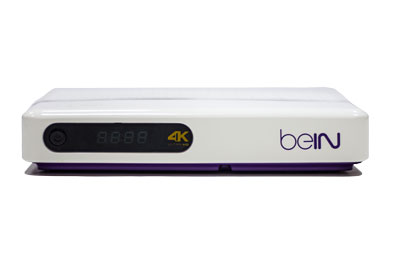
This article presents the latest parameters for the featured channel and offers simple, step-by-step guidance for setting up your receiver, as well as solutions for minor issues that could affect signal quality.
In this guide, you’ll find the most recent settings for the highlighted channel and clear instructions on how to set up your receiver properly.
We also include helpful fixes for any reception or signal problems, allowing you to watch the channel smoothly without interruptions.
In this guide, you’ll find the newest broadcast parameters for the featured channel available on various satellites.
Clear, step-by-step directions are provided to walk you through the receiver setup process, ensuring fast and effortless installation.
You’ll also benefit from practical troubleshooting advice to help resolve common problems such as signal drops or missing channels.
By using this guide, you can enjoy a smooth, consistent, and interruption-free satellite viewing experience.
Step-by-step setup instructions allow users to configure their receivers properly, avoiding interruptions when new or updated channels are added.
Technical information, including transponder lists, symbol rates, and polarization settings, helps viewers achieve stable and clear reception.
Troubleshooting tips address common issues such as weak signals, interference, or temporary outages, reducing disruptions during viewing.
With precise data and structured guidance, users can navigate the satellite environment with confidence and ease.
Combining these practices ensures a smooth, dependable, and enjoyable satellite viewing experience across all channels.
You will also discover helpful troubleshooting guidance to resolve any signal difficulties, guaranteeing smooth and continuous viewing at all times.
Step-by-step setup instructions allow users to configure their receivers properly, avoiding interruptions when new or updated channels are added.
Technical information, including transponder lists, symbol rates, and polarization settings, helps viewers achieve stable and clear reception.
Troubleshooting tips address common issues such as weak signals, interference, or temporary outages, reducing disruptions during viewing.
With precise data and structured guidance, users can navigate the satellite environment with confidence and ease.
Combining these practices ensures a smooth, dependable, and enjoyable satellite viewing experience across all channels.
This article presents the latest parameters for the featured channel and offers simple, step-by-step guidance for setting up your receiver, as well as solutions for minor issues that could affect signal quality.
In this article, we provide all the essential frequency information for the featured channel and guide you through the correct steps to install it on your receiver.
We’ve also included practical troubleshooting advice to help you resolve any reception issues and maintain smooth, uninterrupted viewing.
Baynounah TV, a vibrant Emirati channel launched in 2019, is dedicated to preserving and promoting the rich cultural heritage of the United Arab Emirates.
Broadcasting from Abu Dhabi under the slogan (“It’s Emirati”), Baynounah TV captivates audiences with programs that showcase Emirati traditions, history, and achievements. Known for its flagship show Shair Al Million (Poet of the Million), the channel offers a mix of cultural, social, religious, and entertainment content, making it a favorite among viewers in the UAE and the Arab world.
On the subject of Baynounah TV
Baynounah TV, part of the Abu Dhabi Media Network, is a cultural beacon for Emirati identity.
The channel’s mission is to educate and entertain through programs that celebrate UAE heritage, from traditional poetry to modern achievements under the nation’s visionary leadership.
Its diverse content, including Shair Al Million, social talk shows, and religious segments, appeals to families and all age groups.
Baynounah TV’s high-definition (HD) broadcasts and commitment to quality have earned it a loyal following, particularly in the UAE, where it ranks among the top channels for cultural content.
With a strong online presence on YouTube, Twitter, and its official website, the channel ensures global access to its offerings.
Newest Baynounah TV Frequencies on Nilesat
To tune into Baynounah TV, you need the correct frequency, polarization, symbol rate, and FEC (Forward Error Correction) settings for your satellite receiver.
Below is the most recent frequency for Baynounah TV on Nilesat as of June 2025, compiled from sources like www.lyngsat.com and www.baynounah.ae.
As a free-to-air channel, no subscription or decryption is required. Verify frequencies with these sources or www.taaqup.com, as transponder settings may change.
Nilesat 201/Eutelsat 7 West A (7.0° West)
-
Channel: Baynounah TV HD
-
Frequency: 12322 MHz
-
Polarization: Vertical (V)
-
Transmission Rate: 30000 kS/s
-
FEC: 3/4
-
Coverage: Middle East and North Africa
Additional Notes
-
Satellite Availability: Baynounah TV is primarily available on Nilesat, with no confirmed broadcasts on Arabsat Badr (26.0° East), Yahsat (52.5° East), Hotbird (13.0° East), or Es’hailSat (25.5° East) as of June 2025. Some sources mention Arabsat, but no active frequency is verified.
-
Frequency Accuracy: Older frequencies, such as 12226 MHz (Horizontal) or 11862 MHz (Vertical) on Nilesat, are outdated. The 12322 MHz frequency is the most reliable for 2025.
-
Global Access: Outside MENA, Nilesat’s signal may weaken, especially in Europe or Asia. Watchers can stream Baynounah TV live on www.baynounah.ae or via its YouTube channel.
-
Free-to-Air Access: Baynounah TV requires no subscription, making it accessible to anyone within Nilesat’s footprint.
Tips for Optimal Reception
To ensure a seamless viewing experience for Baynounah TV, follow these reception tips:
-
Dish Size: A 60-80 cm dish is sufficient for Nilesat in MENA regions like Abu Dhabi, Dubai, or Cairo. In fringe regions (e.g., northern Europe, West Africa), use a 90-120 cm dish for stronger signals.
-
Dish Alignment: Align your dish to Nilesat at 7.0° West using a satellite finder or app (e.g., SatFinder, DishPointer). Ensure a clear line of sight without obstructions.
-
LNB Compatibility: Use a Universal Ku-band LNB with local oscillator frequencies of 9.75 GHz (low band) and 10.6 GHz (high band). Ensure DVB-S2 support for HD broadcasts.
-
Signal Strength: Aim for 70% or higher signal quality (ideally 98%) on your receiver’s signal meter to avoid pixelation. Adjust LNB skew for optimal performance.
-
Weather Precautions: Ku-band signals are sensitive to rain fade. Secure your dish and inspect LNB caps for water damage to maintain signal stability.
-
Coverage Verification: Confirm your location is within Nilesat’s MENA beam using coverage maps on www.dishpointer.com or www.satbeams.com.
How to Add Baynounah TV to Your Receiver
Follow these steps to manually add Baynounah TV to your satellite receiver. These instructions are compatible with most models (e.g., Strong, Humax, Technisat), though menu options may vary.
-
Access the Menu:
-
Press “Menu” or “Settings” on your receiver’s remote.
-
Go to “Installation,” “Channel Search,” or “Antenna Setup.”
-
-
Choose Manual Search:
-
Select “Manual Scan,” “Manual Installation,” or “Add Signal Carrier.”
-
Choose “Add TP” or “Edit Signal Carrier” if prompted.
-
-
Select Nilesat:
-
Choose Nilesat 201/Eutelsat 7 West A (7.0° West) from the satellite menu.
-
If unavailable, manually enter 7.0° W as the orbital position.
-
-
Enter Signal Carrier Settings:
-
Input frequency:
-
12322 MHz:
-
Frequency: 12322 MHz
-
Polarization: Vertical (V)
-
Transmission Rate: 27500 kS/s
-
FEC: 3/4
-
-
-
Confirm all values.
-
-
Initiate Scan:
-
Press “Scan,” “Search,” or “OK” to begin the scan.
-
Select “FTA Only” or “All Channels” to include free-to-air channels.
-
Wait 1-3 minutes for the scan to complete.
-
-
Save Channels:
-
Press “Save” or “OK” to store the scanned channels.
-
Baynounah TV will appear in your channel list as “Baynounah TV HD” under “Entertainment” or “Culture.”
-
-
Adjust Dish if Needed:
-
If the signal is weak, tweak the dish’s azimuth and elevation while monitoring the signal meter.
-
Check LNB skew and cables for 70-98% signal strength.
-
-
Test the Channel:
-
Locate Baynounah TV in your channel list and select it for clear playback.
-
If issues persist, recheck settings or consult a technician.
-
Tips:
-
For Strong receivers, enable “LNB Power” in the “Signal Carrier” menu.
-
For Humax, set LNB to “Universal” (9750/10600 MHz).
-
Default PINs (e.g., 0000, 1234) may be needed; check your manual.
Baynounah TV Highlighted broadcasts
Baynounah TV’s content celebrates Emirati culture with a diverse lineup. Key programs include:
Top Shows
-
Shair Al-Qas: A poetry competition showcasing Emirati and Arab poets, cementing the channel’s cultural legacy.
-
Cultural Segments: Documentaries on UAE history and traditions, highlighting Bedouin life and modern milestones.
-
Social Programs: Talk shows addressing family, education, and community issues in the Emirates.
-
Religious Content: Islamic lectures and Ramadan specials for spiritual enrichment.
-
Entertainment: Family-friendly shows blending tradition with modern UAE lifestyle.
Content Types
-
Heritage: Focus on Emirati poetry, folklore, and historical achievements.
-
Social: Discussions on contemporary UAE society and values.
-
Religious: Content fostering Islamic principles and ethics.
-
Educational: Programs promoting cultural awareness and national pride.
Knowing technical details, including symbol rates and polarization, helps maximize signal strength and prevents channels from dropping.
Step-by-step setup instructions guide users through installation and tuning, making the process easy for both beginners and experienced viewers.
Regularly checking new channels or updates to broadcast parameters guarantees uninterrupted access at all times.
Troubleshooting tips provide quick fixes for weak signals, interference, or misalignment, resolving common reception issues efficiently.
Organizing and maintaining accurate frequency data saves time and reduces complications during receiver setup.
By combining reliable information, clear guidance, and practical troubleshooting, viewers can enjoy seamless and uninterrupted satellite viewing.
This comprehensive approach ensures every broadcast remains stable, accessible, and enjoyable across all satellites.